
Quick Answer
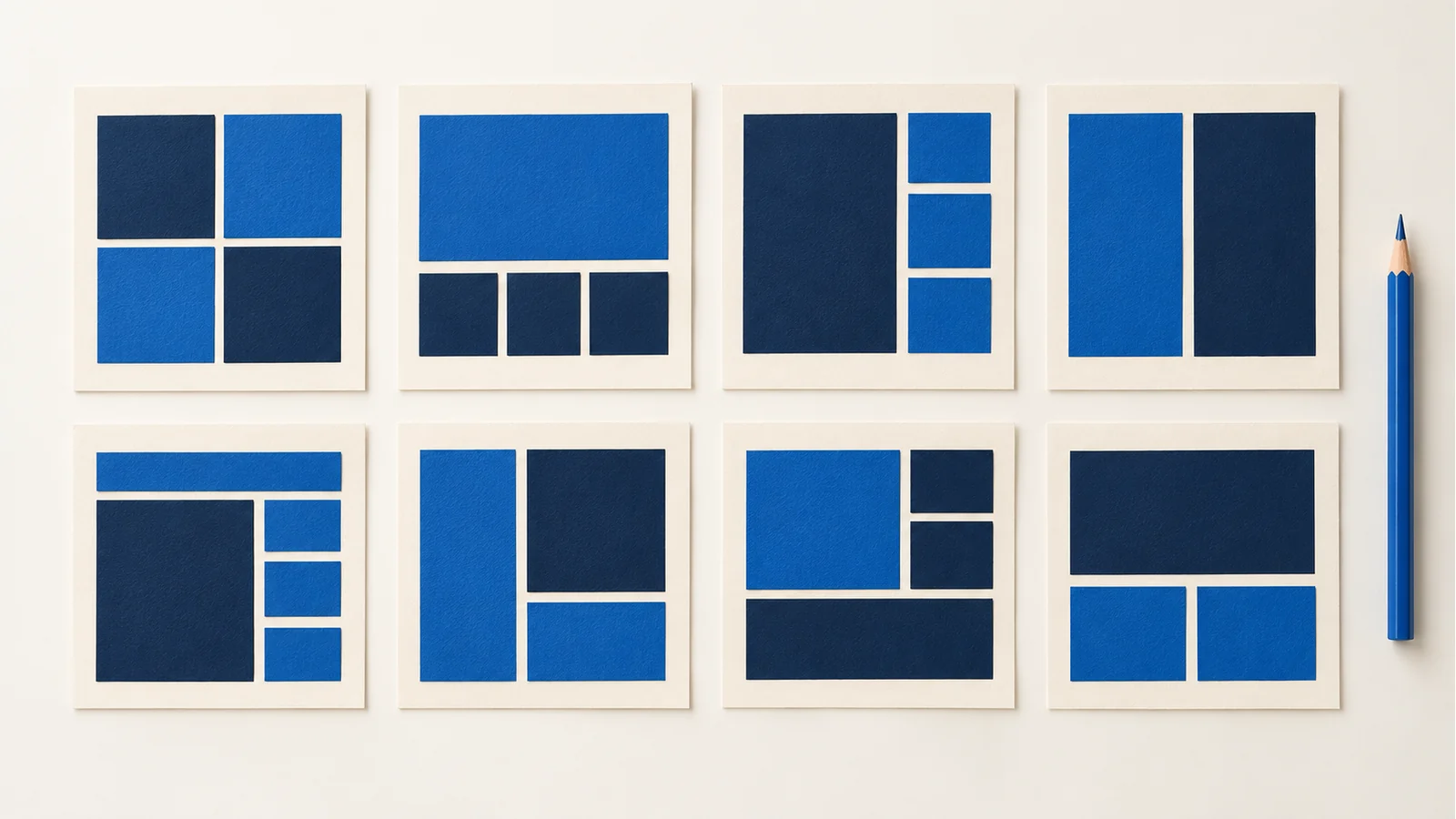
The publisher’s eight Divi CSS Grid sections are prestyled layout starting points. Review access and asset terms, inspect their parent tracks and child placement, then replace demonstration content and test the actual result. Auto-track sizing, auto-fit patterns, gaps and grid density are different controls. None makes an imported composition fit every content set automatically.
Choose a resource because its information structure suits the page, not because a preview has enough empty boxes for every possible section.
Review the eight-section resource
The October 6, 2025 publisher page describes eight prestyled individual sections and one combined export. It supplies a Divi Library import workflow. The archive, access conditions and asset rights remain with Elegant Themes.
Inspect an authorized import in a development copy. Keep its original state distinguishable from the adapted version and review imported presets, variables and content. Remove sample prices, ratings, offers, quotations and identities unless the business has approved supported replacements.
Map the actual parent and child rules
Select the container using Grid and identify its child items in Layers. Review column and row sizing, track counts and gaps. Then inspect child start, end and span rules, along with any overlaps or z-index effects.
A colored background or shadow may conceal how the example was constructed. Confirm that the real text and links are not covered by another item. Our first-grid guide starts with a simpler nonoverlapping structure.
Keep similarly named controls separate
| Control | What to inspect |
|---|---|
| Grid Auto Rows and Columns | Sizing of implicit tracks created beyond the explicit grid |
| Auto-fit track pattern | The repeated track definition and handling of empty tracks |
| Gap | Spacing between neighboring tracks |
| Density | Whether later items can backfill earlier gaps |
MDN’s auto-placement guide explains implicit track sizing. Its repeat() reference covers auto-fit patterns. Setting an auto-track field to Auto does not, by itself, create an auto-fit repeated column template.
Fit the layout to real content and editing
Use the longest approved heading and a representative image proportion. Add and remove an item in the test copy. Review a partial final row, enlarged text and the narrow layout before restoring the intended set.
Recheck spans at breakpoints, reading order with dense packing, and each destination after duplication. A visually complete arrangement can still contain a fixed demonstration link. Confirm an editor can find and change one item’s content without changing an unrelated shared definition.
Our grid reference covers the controls in more detail. WordPress website design can adapt a useful composition around supported content and practical editing requirements.
Key Takeaways
- Review publisher access and asset rights.
- Inspect tracks, children and overlap before rebranding.
- Separate auto tracks, auto-fit, gaps and density.
- Test real content, counts and editing tasks.
Frequently Asked Questions
Does Grid Density control the gap size?
No. Density affects placement and possible backfilling. Gap controls track spacing.
Does Auto in Grid Auto Columns enable auto-fit?
No. It sizes implicit columns. An auto-fit repeat pattern is a different track-definition choice.
Can I leave demonstration offers in an imported layout?
Replace them with supported approved information or remove them. A publisher preview does not establish your business’s offer.