
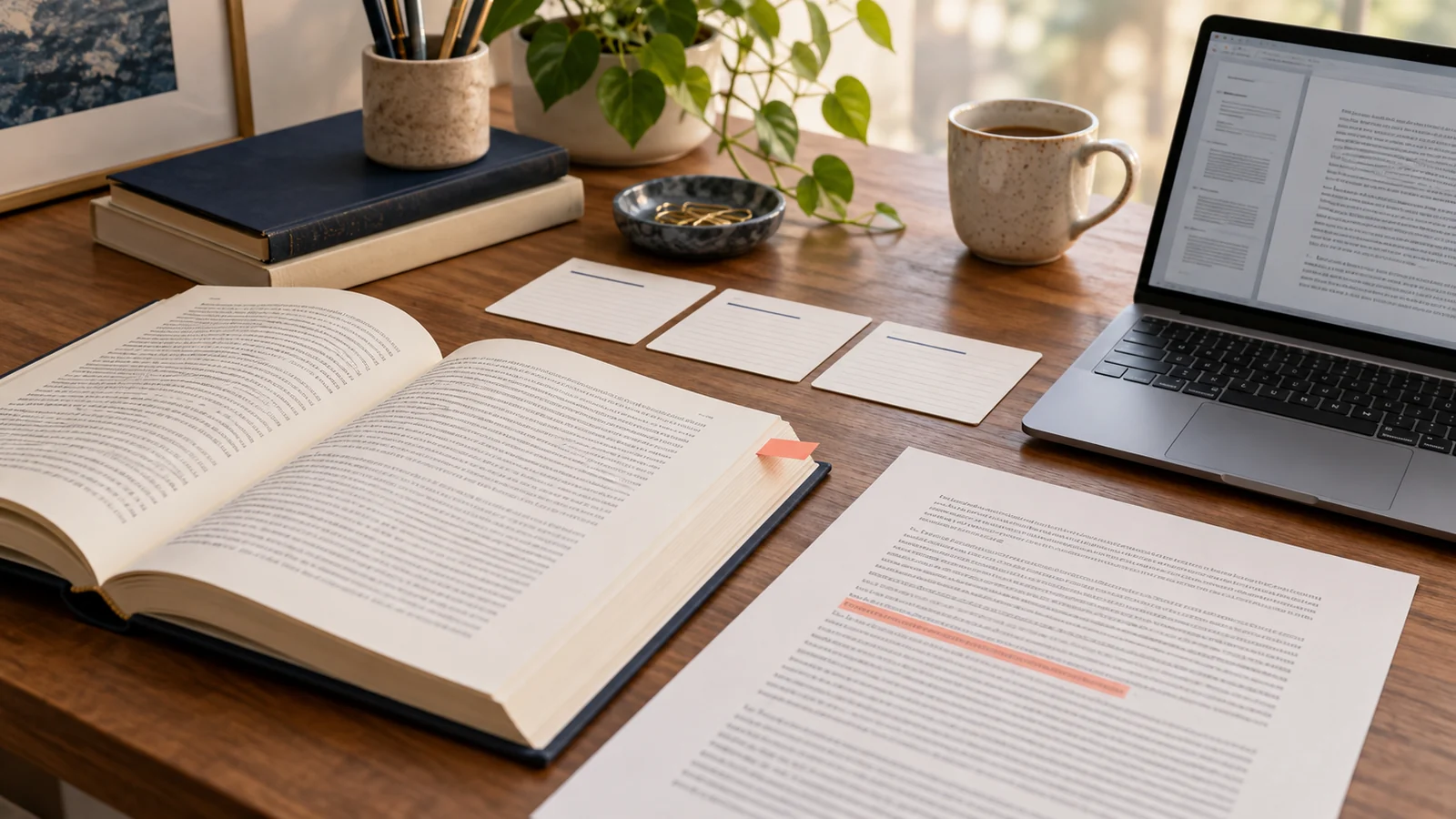
Quick Answer
An AI-generated citation needs two checks: whether the reference identifies a real source, and whether that source supports the exact claim in the draft. Locate the original publication, compare its details and read the relevant passage in context. A working link or correctly formatted bibliography does not complete the second check.
Replace the old tool ranking with a reviewable task
The earlier archive contains an incomplete excerpt from a 2023 essay-tool roundup. Its old prices and recommendations do not establish a current best tool or permission to submit generated academic work. Follow the actual assignment or publication’s requirements for assistance, authorship and disclosure.
For business research, the same source check helps prevent an impressive-looking reference list from lending authority to unsupported website copy. Evaluate the evidence rather than treating fluent wording or a product’s citation feature as verification.
Confirm the source’s identity
Search for the exact title and compare the author, publisher, year and any DOI with the publication itself. A real author’s name can appear in a fabricated or mismatched reference. If a DOI resolves to a different paper, do not silently accept the identifier because it opens.
Purdue University Northwest’s citation-checking guide explains this verification process and the need to read the original source. If you cannot locate the source, keep the reference unverified and seek suitable evidence instead of inventing missing bibliographic details.
Read the claim against the actual passage
Find the relevant statement, method or result. Identify who or what was studied, the time period and any qualification that limits the conclusion. An abstract about one population cannot automatically support a universal business promise.
Keep quotations exact and paraphrases faithful. Preserve a limitation when removing it would change the meaning. A citation may establish that an author proposed an idea without establishing that the idea was tested or proved.
Keep an illustrative claim-disposition record
Suppose an invented draft says “Every business gets more inquiries after changing its website headline.” No real study or client outcome is being asserted here.
- Reference identity
- Locate the proposed source and match its publication details. If it cannot be found, stop treating it as evidence.
- Passage review
- Suppose the located source instead describes one limited experiment and its conditions. Record the exact relevant location and what it actually addresses.
- Decision
- The universal sentence remains unsupported. Remove it or write a narrower, accurate statement that the verified evidence permits.
- Final check
- Recheck the revised sentence and its citation together. Do not preserve the old claim merely by attaching a different plausible reference.
This record separates locating a publication from accepting a conclusion. It also makes unresolved evidence visible to the editor.
Carry the verified meaning into publication
Keep the source location and supported wording with the draft. The grammar review guide addresses a later wording check, while our AI-assisted publishing guide covers the wider editorial process. A website content review should preserve the distinction between supported information and an attractive but unverified promise.
Key Takeaways
- Verify the reference’s identity against the original publication.
- Read the actual passage and its limits.
- Remove or narrow claims the source does not support.
- Review the final sentence and citation together.
Frequently Asked Questions
Does a working DOI prove the claim?
No. Confirm that it identifies the intended source, then read whether that source supports the statement.
What if I cannot locate the cited publication?
Leave it unverified and find appropriate evidence. Do not fill in an invented title, author or page number.
Can a real study support an overly broad sentence?
The source may have narrower methods, populations or conditions. Revise the sentence to fit the evidence or remove it.