
Quick Answer
A luxury website can use distinctive photography, typography and pacing while keeping the visitor’s first useful action clear. Define that action before approving the visual concept. Review a usable static presentation as well as any cinematic version, so product information and an inquiry route do not depend on waiting for an animation or discovering a hidden gesture.
Study references for a named design question
The luxury-site collection can help frame visual research. A screenshot or publisher description does not establish how a brand’s current website performs, converts or works with assistive technology.
Name what you are studying: a material photograph, the scale of a product detail, a type hierarchy or the relationship between an image and a request. Avoid copying a whole visual system because it belongs to a familiar luxury brand. The design must express the actual business and use media it is permitted to publish.
Give the art direction a functional brief
Choose one important visitor task and the information needed to complete it. For a made-to-order object, that could mean understanding the object, finding its approved material and dimension information, and requesting details. It need not imply an immediate online purchase.
Keep that task visible in concept reviews. A beautiful opening scene can still leave the person unsure what is available or how to proceed. Decide which content and controls must remain usable while optional media loads or stays stopped.
Review an illustrative static route
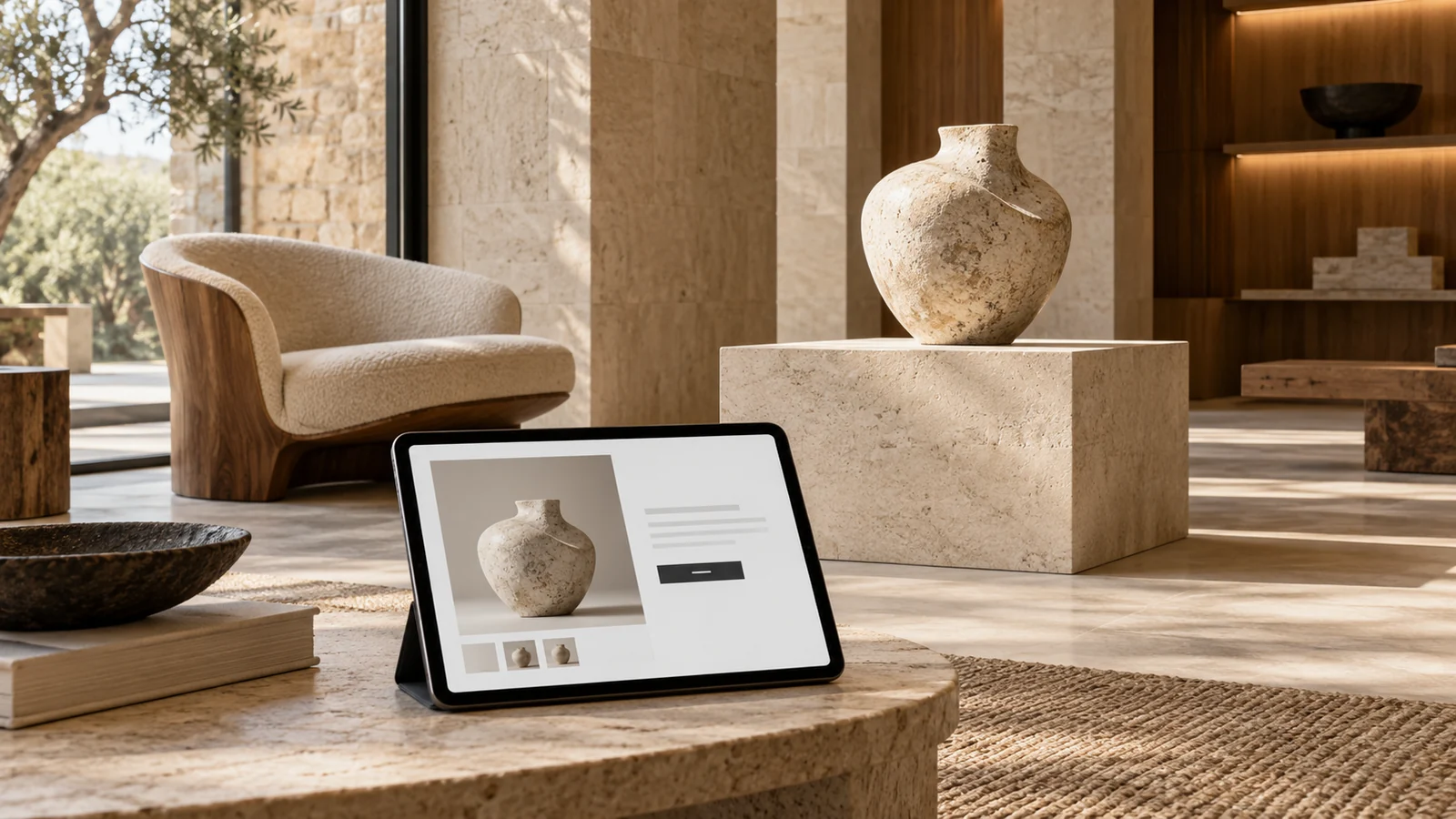
This hypothetical brief concerns a ceramic studio. It is not a client project, live test or claim about any brand in the reference collection.
- Visitor task
- Identify one object, read its approved dimensions and material, then ask about ordering.
- Art direction
- Use a large material-detail photograph and restrained typography. An optional process film may explain the making technique.
- Essential static route
- Keep the object’s identity, specifications and clearly named inquiry link available without playing the film or hovering over an unlabeled image.
- Acceptance decision
- Review that route on a narrow screen and with keyboard input. Record whether the inquiry asks a question or confirms an order, and make the copy match the actual outcome.
Keep untested states in the record. A static mockup cannot prove that a page loads promptly, focus reaches the action or a form sends the request.
Treat motion as an optional design choice to inspect
W3C’s Pause, Stop, Hide explanation describes controls for moving content that starts automatically, lasts more than five seconds and appears alongside other content, with an essential-activity exception. It addresses auto-updating content separately. Review the conditions that apply to the actual page.
A motion preference or a handsome pause icon alone does not prove that implementation meets its requirements. Check actual behavior, and keep the essential task understandable when decorative motion is stopped. Our control-state guide addresses focus and activation feedback, while the video-asset guide covers media dependencies and delivery.
Our website redesign service can connect the visual concept with the visitor’s usable route. Evaluate that implementation before making a conversion claim; our CRO review guide explains the separate evidence needed for a measured improvement.
Key Takeaways
- Study visual references for a specific question.
- Define the first useful task and its essential information.
- Review the static route and actual motion controls.
- Keep visual approval separate from functional and conversion evidence.
Frequently Asked Questions
Does a luxury website need an animated introduction?
No. Choose motion because it helps the intended experience, and verify that essential information and actions remain usable.
Can a reference screenshot prove another brand’s conversion success?
No. It shows an appearance at a particular capture, not the measured outcome of that design.
Should an inquiry button say Buy now?
Use wording that matches the real action. An inquiry request should not imply that payment or an order is completed.