
Quick Answer
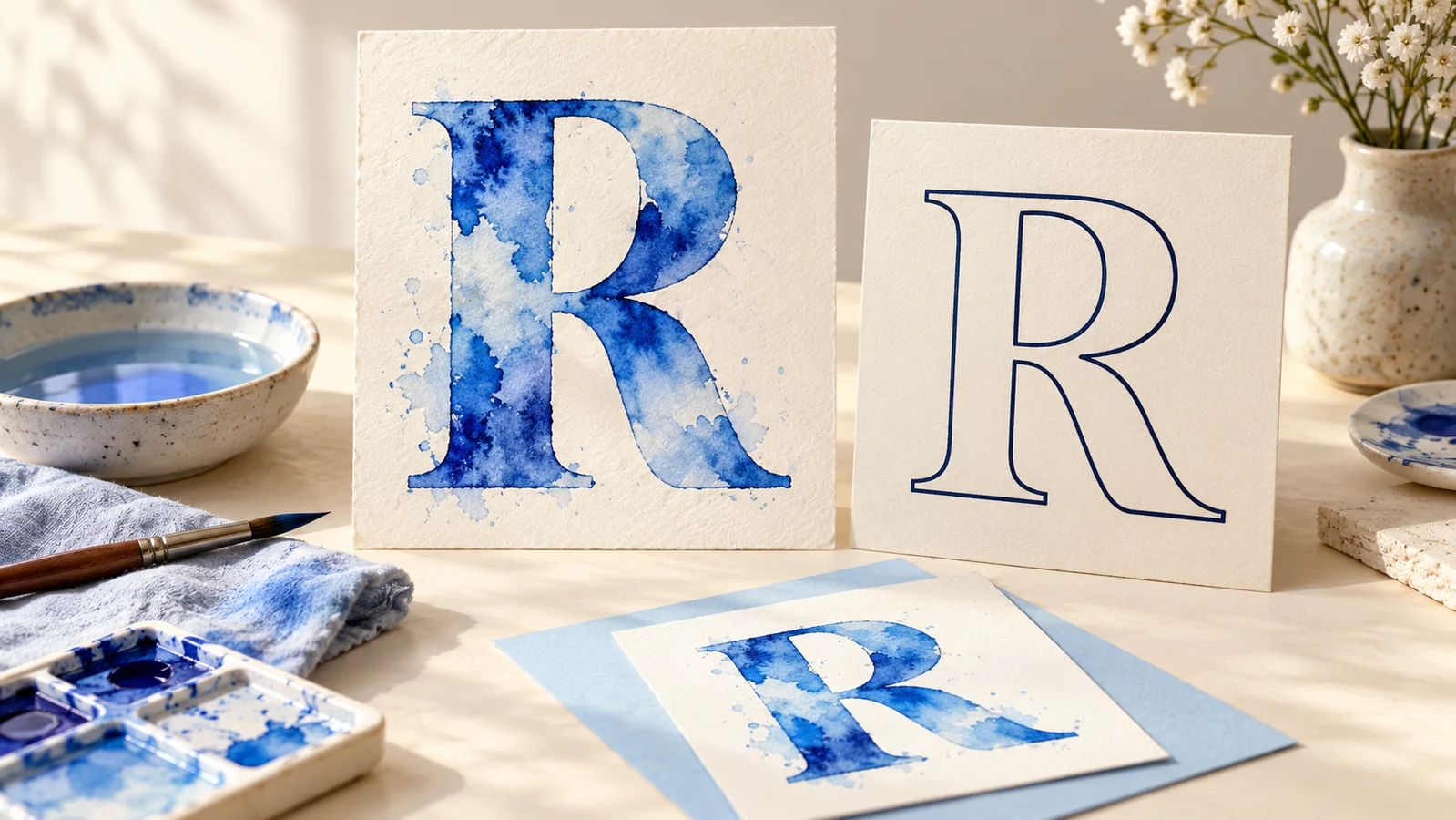
For a watercolor font, verify which supplied file creates the painted effect and whether the target application and export preserve it. A plain companion style can look different from a color-glyph version even when the family name is similar. Review the delivered artwork and a readable fallback before approving the treatment.
Find where the paint effect lives
The watercolor-font roundup includes resources described with different formats and treatments. Those descriptions are starting points for inspection. They do not establish the contents, current availability or permission of a file you have not obtained.
A painted appearance might come from color-glyph information, a texture applied to ordinary lettering or separate artwork. Record the actual construction rather than treating every file labeled watercolor as interchangeable.
Separate color glyphs from ordinary outlines
Microsoft’s OpenType SVG specification describes an SVG table containing glyph artwork, which can include vector and raster content. It also requires corresponding ordinary glyph outlines. The color representation and outline representation are distinct parts of the font.
That specification does not establish how every application or export pipeline will render a particular font. Check the supplier’s actual requirements and the software used to prepare and deliver the artwork. A familiar extension or successful font installation alone is insufficient proof of the final appearance.
Compare a painted file and a plain companion
Suppose a hypothetical invitation project receives a permitted painted style and a plain companion. The approved heading needs visible paint variation. Use a small record to avoid approving one file while delivering the other:
- Source identity
- Record the exact file and style intended to supply the paint effect, plus the separate companion if included. Keep their source and permission together.
- Working application
- Inspect the actual heading in the intended application. Record whether the paint variation appears as expected rather than assuming a family name identifies the active file.
- Exported result
- Compare the delivered artwork with the approved working view at the intended size and background. Check whether texture, transparency or edge detail changed.
- Fallback decision
- Approve the plain alternative explicitly if it is needed. Do not substitute it silently while claiming the painted treatment was preserved.
This is an illustrative delivery exercise. No font was installed or exported to establish an application compatibility result.
Keep the actual words readable
Paint variation can weaken thin areas or close small spaces inside letters. Review the actual heading, punctuation and any necessary characters at the final size. Inspect the lightest parts against the background rather than judging only the darkest strokes.
Keep required page information available in an appropriate accessible form if decorative lettering is delivered as artwork. Do not flatten ordinary content into images solely to preserve a font effect without reviewing that consequence.
Retain permission and the approved delivery
Verify the exact provider’s terms for the intended project, including embedding, artwork use and client handoff where relevant. A free label on a roundup does not establish commercial permission for every resource.
Our artistic-font guide covers assigning a display role. The font handoff guide covers actual files and browser requirements, while the paper-texture guide addresses a separate background treatment.
Key Takeaways
- Identify how the file produces its painted effect.
- Compare working and exported appearances.
- Approve a plain fallback deliberately.
- Keep the exact file’s permission and delivery record.
Frequently Asked Questions
Does an OTF file always preserve watercolor texture?
The extension alone does not establish its contents or target rendering. Inspect the actual file, application and delivered output.
Why might a plain companion look different?
Its outline treatment can differ from the painted color representation. Keep the intended file and style explicit.
Are all free watercolor fonts commercially usable?
No permission follows from the category label. Read the exact file’s current license for the intended use.